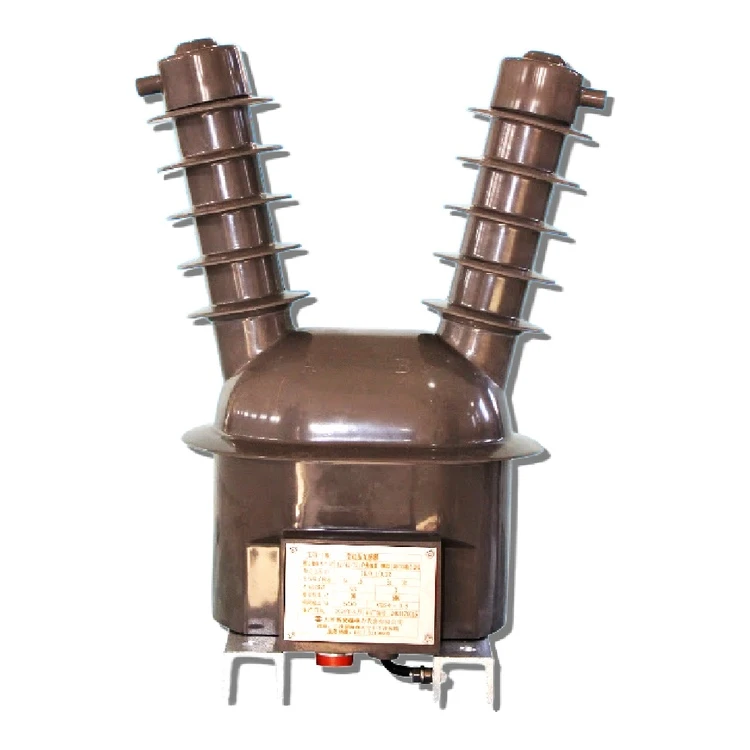
The core of combined instrument transformer connections lies in the wiring of the voltage transformer (PT) and the current transformer (CT); specific phase sequence and polarity requirements must be followed to ensure accurate metering and protection.
Voltage Transformer (PT) Connections: Typically configured as V/V or Y/Y.
V/V Connection: Also known as an incomplete delta connection; it utilizes two single-phase voltage transformers connected across phases A-B and B-C, respectively. This method saves one transformer but allows for the measurement of line voltages only (not phase voltages); it is suitable for three-phase, three-wire systems.
Y/Y Connection: Utilizes three single-phase voltage transformers or one three-phase, five-limb voltage transformer, with primary windings connected in a star (Y) configuration and the neutral point grounded. This method allows for the measurement of both line and phase voltages and is suitable for three-phase, four-wire systems.
Current Transformer (CT) Connections: Typically configured as star (Y) or incomplete star (V).
Star (Y) Connection: The terminals of the same polarity (e.g., S1) on the secondary windings of three current transformers are shorted together and grounded, while the other terminals (S2) are connected individually. This configuration monitors currents in all three phases and is suitable for overcurrent protection and metering in three-phase, four-wire systems.
Incomplete Star (V) Connection: Current transformers are installed only on phases A and C; the current for phase B is calculated via the vector sum of the currents from phases A and C. This configuration is cost-effective but is restricted to use in three-phase, three-wire systems.