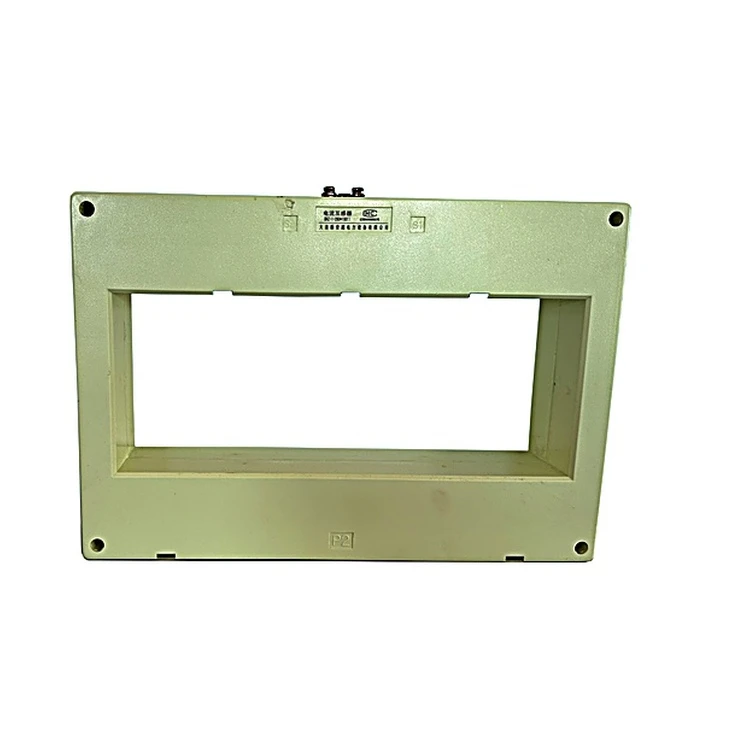
Demand growth is driven by new energy and smart grids: the integration of intermittent power sources like wind and solar requires more precise current monitoring; nations are advancing grid digitalization (e.g., China's "14th Five-Year Plan" for smart grids and the EU's "Digital Energy System"); and the proliferation of EV charging infrastructure (fast-charging piles and battery-swapping stations) is generating demand for power metering and protection equipment.
Technological iteration is accelerating: traditional electromagnetic instrument transformers are gradually being replaced by electronic types (such as Rogowski coils) and optical types (fiber-optic transformers). Products are evolving toward integration (incorporating sensors for temperature, harmonics, etc.), low power consumption, and the use of eco-friendly materials (oil-free designs, solid-state insulation). Future transformers will deeply integrate IoT, big data, and cloud computing technologies, evolving into devices that combine measurement, diagnostics, and early warning capabilities.
Regarding the competitive landscape, leading companies drive innovation: ABB and Siemens are increasing investment in digital solutions, while domestic Chinese firms (such as NARI Technology, XJ Electric, and Sieyuan Electric) have mastered core electronic transformer technologies; their product portfolios cover all voltage levels, and they have achieved large-scale application in UHV (Ultra-High Voltage) projects.
Regional markets are diverging: grid expansion in emerging markets (India, Southeast Asia, etc.) is driving demand for medium- and low-voltage transformers, whereas developed nations (Europe and the US) are focusing on replacing aging equipment-for instance, the US Infrastructure Act is promoting the coordinated upgrading of transformers and smart meters.
Supply chain fluctuations: price volatility in magnetic materials like silicon steel and nanocrystalline alloys impacts costs. Rising technical barriers: the stability and long-term reliability of optical transformers still require validation, which constrains their large-scale commercialization.
Over the next five years, the global current transformer market is projected to grow at an average annual rate of 6–8%, with smart grids and new energy sectors accounting for over 60% of this demand. Companies capable of synergistic hardware and software development will dominate the market.